A Different Kind of Kin(g)dom: A sermon based on Mark 1:14-20

Mark 1:14-20

I mentioned last week that of the gospels, John has taken me the longest to connect with. This week we find ourselves in Mark, though, and Mark has long been my favorite. Maybe gospels are like children and we’re not supposed to have favorites, but I guess do. (Have a favorite gospel, I mean, not a favorite child.)

Mark’s gospel has a fast pace to it. For the grammarians among us, there are a lot of sentence fragments that start with “And then…”. The versions of shared stories that appear in Mark are typically short and lack some of the editorial detail or theological explanation. And yet, that doesn’t mean there isn’t a theological thread through Mark; it just means we get to piece it together from the way the stories are told and how the whole book is put together. I love this responsibility that is given to us, the readers, disciples of Jesus, the body of Christ. 

The story we explore this Sunday, the beginning of Jesus’ Galilean ministry and the calling of his first disciples (Mark’s version), gives us a huge hint about Mark’s theology and ultimate message about who Jesus is, why he lived, died, and lives again, and what it means to be his followers, his disciples.

The worship video for this sermon is available here. (The sermon is really from Mark, not Matthew, no matter what I said when introducing the scripture.)

Kin(g)dom Sight: A sermon for January 14, 2024, Martin Luther King, Jr Weekend, based on John 1:43-51

The worship video for this sermon is available here.

John 1:43-51

Photo by wendel moretti on Pexels.com

It has taken me a while to warm to up to the gospel according to John. And by a while I don’t mean a few days this week in preparation for worship today. I mean like years, decades. Maybe it’s taken that long for my brain that was trained in the sciences to finally open up to the poetry and symbolism and mysticism in the fourth gospel. But I’m coming around to. Where I used to get frustrated, thinking, “Just say what you mean.” Now I’m more intrigued by how many different things are meant by the one thing that is said.

Continue reading

Keep Alert: A sermon for the 1st Sunday of Advent,

A worship video of this sermon is available here.

Isaiah 64:1-9
Mark 13:24-37

In case you’re wondering if you’re having deja vu, yes, this is, indeed, our fourth apocalyptic text in as many Sundays.  Three weeks ago there were quite a few similarities in the “punch line” of keep awake, when we heard the story from Matthew of the ten bridesmaids waiting for the bridegroom who was delayed. Then in the next two weeks there were parables – one of the talents that offered a vision of the kindom of God where the conventional economic system is turned upside down, and another of the sheep and the goats where the needs of the “least of these” are centered. These stories may not feel like “apocalypse,” but they are depictions of how we are called to live when we know that there is going to be a great reckoning and setting things right, but it hasn’t happened to completion just yet.

Photo by Matt Botsford on Unsplash

And now here on the fourth Sunday in a row, the first Sunday of a new Christian year, the first Sunday of Advent, the season of waiting for this coming of Christ, we have another description of what some call “the end times.” For us Presbyterians, who tend to be known for our orderliness, this is an awful lot of talk about the chaos of the unknown and unpredictable.  And yet, one of the commentaries I read a few weeks ago when thinking about the Matthew passage said “The expectation of Christ’s return is central to Christian living.”¹

Continue reading

Crossing Chasms

photo by cea+
on flickr, used with permission of Creative Commons Attribution 2.0 license

Luke 16:19-31

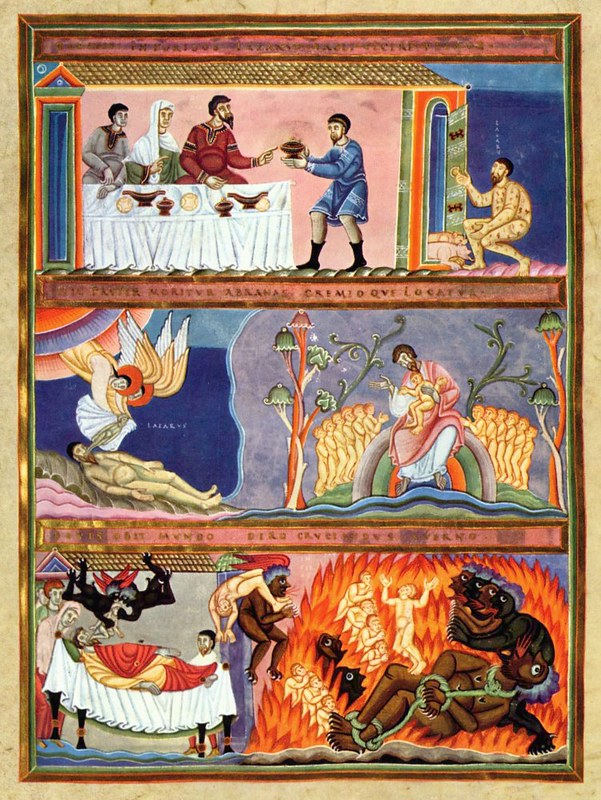
The rich man in Jesus’s story is in quite a predicament, isn’t he? Things are not going as he expected them to at all. Having arrived in Hades, not so much the heaven and hell of traditional Western Christianity, but a general place of all the dead, he is not getting the treatment he expected.  Understanding riches to be a sign of God’s favor he seems surprised to be tormented by flames while Lazarus, the man who was clearly cursed with poverty and illness, is being comforted in the bosom of Abraham. The rich man doesn’t miss a beat, though.  He knows just want to do. He will order someone to fix his agony for him.

Continue reading

Who do you say that I am?

Mark 8:22-9:8

I wonder if Jesus would be the kind of person who googles himself. I mean, if this story lmgtfywere taking place today, of course. I mean, instead of asking his disciples, “Who do the people say that I am?” I wonder if today he would have just popped open his laptop, pulled up a browser, and typed his name in the search bar to see what showed up, to see who the people say that he is.

Continue reading

A Cross-shaped Life: a sermon on Matthew 16:21-28

Sometimes when I’m leading a new Bible study I’ll start with some variation on a game I like to call “Shakespeare or Scripture?” Let’s play a little bit of it now.

shakespeare-bible

You can find an on-line quiz with these examples and more at Oxford Dictionaries

  • “Tell truth, and shame the devil” – King Henry IV
  • “Every man that eateth the sour grape, his teeth shall be set on edge” – Jeremiah 31:30
  • “Condemn the fault, and not the actor of it?” – Measure for Measure
  • “Put a knife to thy throat, if thou be a man given to appetite.” – Proverbs 23:2
  • “Let us eat and drink; for tomorrow we shall die” – Isaiah 22:13

Continue reading

The God Box – a sermon on Matthew 17:1-9 for Transfiguration Sunday

Exodus 24:12-18
Matthew 17:1-9Alexandr_Ivanov_015

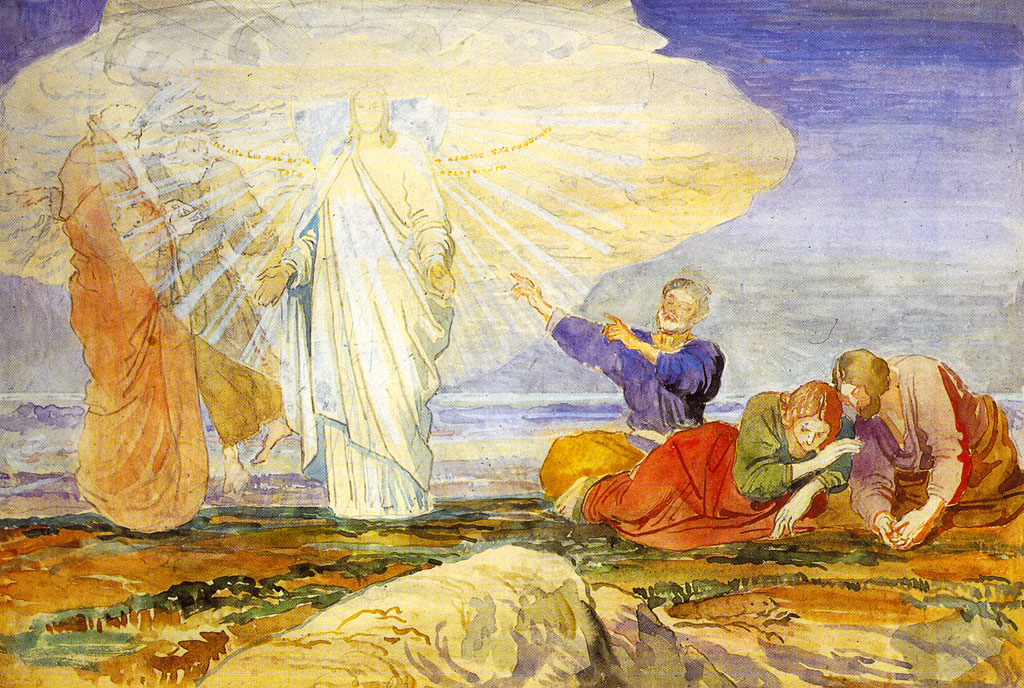
“It is good…” Peter says when he sees the face of Jesus change before his very eyes. It shone like the sun; his clothes began to dazzle, bright white. People appear out of thin air and start talking to Jesus, and Peter says, “It is good.” I’m not so sure I would have gone to “good” first, personally. I think I would have jumped straight to the fear the disciples moved to when the voice of God spoke on the mountaintop, but Peter knew it was good. Continue reading

The Next Level – A sermon on Micah 6:1-8 and Matthew 5:1-12

refugee.jpg

Matthew 5:1-12
Micah 6:1-8
If you, like me, have some friends who are not church-goers and who lovingly push back on your spiritual lives and beliefs, or if, also like me, you sometimes ask yourself questions about your own faith and devotion, “Why do we read this old book today? How could it ever be relevant?” I hope today’s readings help answer those questions. A call to do justice, the counter-cultural declaration that God is with the poor in spirit, the one who mourn, those who hunger and thirst for righteousness, these are the words that the church and the faithful have been given by God to speak into a nation where the president signed an executive order that “suspended entry of all refugees to the United States for 120 days, barred Syrian refugees indefinitely, and blocked entry into the United States for 90 days for citizens of seven predominantly Muslim countries: Iran, Iraq, Libya, Somalia, Sudan, Syria and Yemen.” (from the New York Times, “Judge Blocks Trump Order on Refugees Amid Chaos and Outcry Worldwide,” By MICHAEL D. SHEAR, NICHOLAS KULISH and ALAN FEUER, JAN. 28, 2017) Continue reading

Discipleship Foolishness – A sermon on Matthew 4:12-23 and 1 Corinthians 1:10-18

1 Corinthians 1:10-18
Matthew 4:12-23

I carry in one of my wallets a little 3×5 index card that has been folded in half and tucked away in every wallet I’ve had for almost 30 years. The crease is getting weak and the edges are tattered, so I don’t open it up too often anymore. But I know it’s there and many of the words written on it are seared in my memory. It’s a list I made in the 8th grade, a list of things to do before I die, a bucket list, written before the term bucket list existed.

It’s a strange mix of things I could actually accomplish by my own hard work, determination, and planning (achieve a certain score on the SAT, perform in the All-State32420341796_3c89318127 Orchestra, visit Africa, be a missionary) and things that are completely out of my control or are impossible to achieve (give birth to twins – out of my control; own a chimpanzee – impossible). One of the items has been staring at me this weekend from the list’s spot among a ridiculous collection of frequent flier membership cards. I know right where it appears on the card, “March for something important in Washington, DC.” Continue reading