Hometown Heroes: A sermon on Luke 4:14-30

Luke 4:14-30

Our family went down a Wikipedia rabbit hole last night at the dinner table. For reasons I already don’t remember, we started looking up famous people who had attended our high schools and the high schools Margaret might attend next year after we move. My high school had Bill Nelson, a congressman who also traveled to space during the shuttle program. Phil’s had a member of the 1924 US Olympic soccer team.  Geneva doesn’t have a page of famous alumni, but we came up with a couple from our own memory, including the recent Olympic triathlon medalist. In Pennsylvania we found a couple of football players and the author of The Devil Wears Prada. 

Kevin McDowell, Geneva High School Class of 2011, Olympic Games Tokyo 2020, silver (Mixed Relay), 6th (Individual)

Hometown hero stories are fun, aren’t they? When our heroes that we’ve known since they were “this small” come home the local newspapers and television stations come out to take pictures and interview them. There’s a sense of pride and excitement.  Maybe they get to wave to the crowd from the middle of the football field during half time!

Jesus came back to Nazareth just such a hometown hero. 

Continue reading

The Armor of God: A sermon based on Joshua 24: 1-2a, 14-18 and Ephesians 6:10-20

Here’s a link to the worship video of this sermon which is also embedded at the bottom of the post.

Joshua 24: 1-2a, 14-18
Ephesians 6:10-20

And that building – it isn’t even half as old as our texts.

As some of you know, I spent almost 2 weeks in Scotland earlier this month.  I spent some of my time exploring the city of Glasgow, but for most of my trip I was a guest of the Iona Community at the 13th century abbey where they live in community and offer programming for pilgrims, learners, and visitors. Every morning and every evening in the sanctuary of that abbey I found myself in complete awe of the continuity of our faith – of the generations upon generations those stone walls had held, of the songs they had heard song, the prayers that were held in their crevices, the words of scripture that had echoed across their surfaces. It was breathtaking and centering and unifying every time we gathered, to be a part of something so ancient and so contemporary all at the same time.

It’s kind of amazing when you stop to think about it, that these words that we read on a Sunday morning (and hopefully more often than that!) have been read or heard for as long as the they have – a little less than 2,000 years for the text from Ephesians, at leas 2,600 years for the current form of Joshua. And still we turn to them.  Still we read them.  Still we question them. Still we listen for what God is saying to the church today through them.

That’s the good news about really old Scriptures.

Continue reading

The Courage of Peace: A sermon on the beheading of John the Baptist, Mark 6:14-29

Psalm 85:8-13
Mark 6:14-29

This is one of those Sunday mornings that potentially sent a number of preachers back to the drawing board based on Saturday’s news. It happens sometimes (and in the case of violence, particularly political violence, it seems to be happening more and more frequently). But it happens sometimes that something takes place in the neighborhood or country or world made that just can’t be ignored when the worshiping community gathers on Sunday morning, even if it happens after all the plans were made.

However, for folks following the lectionary, and even more particularly folks who had planned to preach from the gospel, there was potentially less re-writing to do. Because unfortunately, political violence isn’t new. And really it’s persistence is part of what makes it so evil. That human beings continue to think that scaring, and hurting, and even killing our opponents is a reasonable way to get to the more perfect society we crave is evidence of our sinfulness and the marring of God’s image in all of us.

Violence used to intimidate, violence used to threaten, violence used to try to appease one group or advance another, violence used to silence voices and the people we don’t like – is not the answer. It is not righteous. It is not God-fearing. It is not justice-seeking. It most certainly is not courageous, which, by my reading, is at least one point Mark is trying to make in telling the story of the violence of the beheading of John the Baptist in the middle of stories about the ministry of Jesus and the sending of his disciples.

Continue reading

Somewhere Over the Rainbow – A sermon on Psalm 22:1-11 and Matthew 23:37-39

This is the first week of our Lent series with The Wizard of Oz. Rather than considering the story allegorically, where each character or scene or motif corresponds directly to a biblical figure or place or concept, we’ll be focusing in on different themes in the story that overlap with the traditional Lenten themes of spiritual growth and discipleship.

We start our walk to Easter with scripture and song, “Over the Rainbow” of course, to get us thinking about the role longing plays in our spiritual journey. Traditional Lenten practices include creating a sense of longing through fasting, but the experience of longing for God’s love and presence, longing for a new reality that feels as far as the other side of the rainbow, isn’t something most of us have to try to create. 

A worship video of this sermon, starting with the scripture readings, is available below, and the manuscript follows.

Continue reading

The practice of lament and protest

The blessing of Zoom worship (there are one or two) is that it is easier to capture a video of just a sermon. This morning I stepped into the virtual pulpit (sat at my kitchen table in front of my laptop) to preach about racism and white privilege and lament and protest and to imagine what the Spirit is telling us our congregation’s role is in this movement of anti-racism justice. When I edit up my manuscript I’ll put it here as well. The reading of scripture (Lamentations 1:8-22; 2:10-22) is about half the video. I just didn’t want to make any cuts. #BlackLivesMatter

Yes! How? A sermon on Acts 18:1-4 and 1 Cor. 1:10-18

Acts 18:1-4
1 Corinthians 1:10-18

1234840280_39bdcf1f93_w

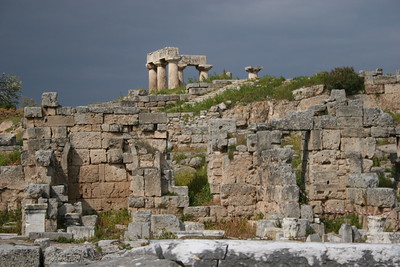
The ruins of Corinth, by Romanus_too, shared on Flickr, used with permission via Creative Commons License

I wonder how Paul found out about Aquila and Priscilla.  Were they the friends of a neighbor he used to pass on his walk down the street to the market every week back in Tarsus?  Were they the Hebrew school classmates of his sister’s husband with whom he had recently connected when they ran into each other unexpectedly in Athens? Continue reading

A quick trip to DC (but not a quick post – sheesh)

This started as a Facebook post, but it kept going and going. So now it’s a blog post on a blog I haven’t touched in over a year. Don’t think this means I’ll touch it again after this trip. 🙂 This sounds sort of strange, but I really don’t like writing much. Anyway…

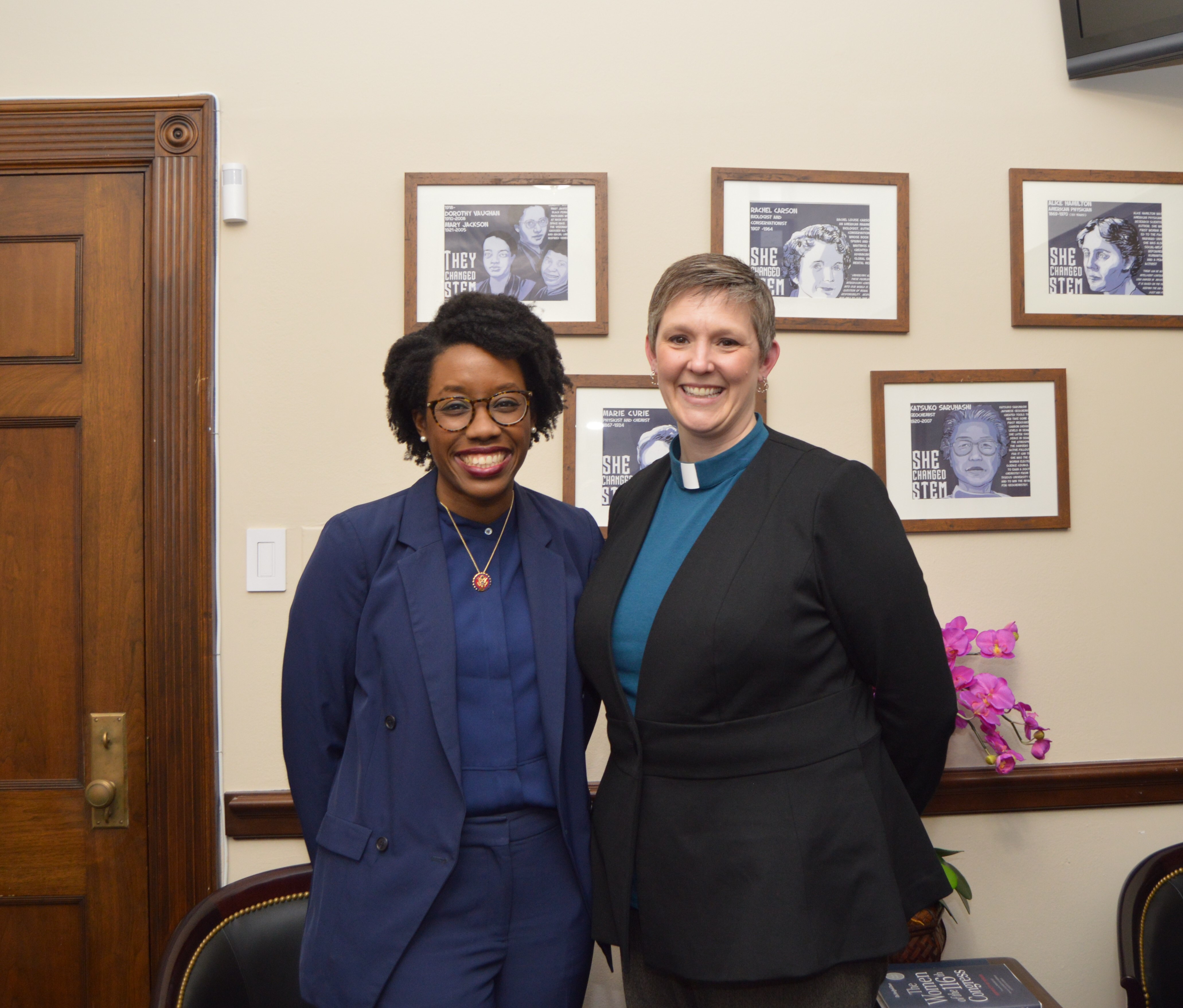
My (not so) quick run down on my day in DC, a trip I’m on in order to go to the National Prayer Breakfast tomorrow morning as the guest of my congresswoman, Rep. Lauren Underwood:
Continue reading

The Lord is with you

Genesis 39

It is impossible, and maybe even irresponsible, to read this story on this Sunday, after the conversation that has been going on nationally this week and for some months, and not take some time to acknowledge the painful reality of sexual violence and the injustices that can occur when there is an imbalance of power between two people.

In Joseph’s story the genders are likely the reverse of what we typically hear about in reports of assault, but again, the power imbalance is recognizable. A majority person with social, racial, and economic privilege, in this case an Egyptian woman, the wife of the captain of the guard, Potiphar, in our context more often a man with similar privilege, attempts to take what they believe they have ownership of or access to, the body and agency of a minority person, in this case an enslaved Israelite man, while in our context it is most often a woman or a person who is a part of a racial or sexual minority.

The situation, sadly Scripture tells us, is not new. And I wish, I so desperately wish this story, or really any story in the Bible spent a lot more time declaring what I am sure we all agree on – – This is wrong. This is sinful. This is contrary to anything God desires for humanity. Even when the story turns out good in the end, it is not because God is using assault to prove a point. And I wish, I so desperately wish I didn’t have to say that in 2018, but I do because there are people out there who will say the exact opposite – that God will put someone through a sexual assault to make them stronger, make them better able to help others, or even to punish them. But that is false, and that is the kind of dangerous faith-based talk that keeps some people from speaking up sooner.

If there is anyone in this room that has been made to think that about the violence inflicted upon them, hear me now. That is false. God’s love does not work that way. God’s love believes you. God’s love sees you. God’s love weeps with you. And God’s love desires and works for your healing and wholeness. There is nothing more sure to me than this. You are not at fault, and if you ever need a place to share your experience of what makes you able say “me too” I will listen. Me too.

*****

Continue reading