The gospel is political.

KEEP CALM AND DON'T READ THE COMMENTS Poster
I read the comments.  I know they say, “Don’t read the comments,” but I read the comments, and now I feel like I need to respond.  The current comments that I read were on a Facebook post under a link to a Louisville, KY news station’s report about the response of the Stated Clerk of the Presbyterian Church (USA) to a church asking for a review of Donald Trump’s membership in the PC(USA).  (Spoiler alert: Although he was baptized in a Presbyterian congregation, he’s not currently a member of a PC(USA) congregation, so there is no membership to review or, as the headlines are implying, revoke.)  Mulitple comments, however, didn’t even address this specific question.  Instead they made declarations like “…we as a church have no business in politics.” And that’s what fired me up.

PC(USA) Stated Clerk responds to questions on Trump’s membership.”Leaders at the Presbyterian headquarters in…

Posted by Presbyterian Church (U.S.A.) on Friday, December 11, 2015

Continue reading

The Way of Peace – an Advent 2 sermon

zechariah iconThe Song of Zechariah found in Luke 1:68-79, are some of the first words the priest uttered upon the birth of his son, John, the cousin of Jesus, the one we know as John the Baptist.  Zechariah had been made mute by the angel Gabriel at the start of his wife’s pregnancy because of his fear and disbelief, but when the child was born and Zechariah and Elizabeth named him John as Gabriel had instructed them, his tongue was freed and filled with Holy Spirit John’s father, Zechariah, spoke this prophecy.  Listen now for the words he proclaimed.

Luke 1:68-79

Zechariah had been silent for the entire duration of Elizabeth’s pregnancy.  Silent.  He spoke not one word.  He didn’t ask how she was feeling.  He didn’t wonder aloud with her when the child would come.  He also didn’t stick his foot in his mouth asking inappropriately about just how big her stomach would get, so maybe there were some advantages.  But Zechariah had been silent the entire pregnancy, unable to speak at home or in the temple. Continue reading

What are you waiting for? – A sermon on for Advent 1

Jeremiah 33:14-16

As I sometimes do when I’m preparing for Sunday, early last week I went back to read a sermon I wrote on this same text several years ago.  I always do so with fear and trepidation because I never know what I will find – a memory of a difficult time or a special celebration in the life of the church, a sermon I don’t think I can top this time, or a trainwreck I’m embarrassed I ever delivered.

By the time I read my 6 year old sermon on Tuesday afternoon last week 22654306929_5a32b321catwo men in their twenties had been arrested for shooting five people involved in the protests around the recent police killing of an African American man in north Minneapolis.  Two more were later arrested, all four were suspected white supremacists.  It was just hours before the dashboard cam video of the horrific killing of teenager Laquan McDonald in Chicago was released worldwide. Add these recent events to the recent terrifying tide of violence and centuries old systemic racism against African Americans in this country and in this week of giving thanks instead I was asking, along with throngs of others online and around the country, “How long, O Lord?” Continue reading

What is truth? – A sermon for Reign of Christ Sunday

John 18:33-38a

“What is truth?” Pilate asks of Jesus.  What is truth?

This question struck me this week as I, like so many others, have been
watching the world news unfold in the wake of the attacks in Paris, as a public debate is taking place about what the “true” Christian response is to a Syrian refugee crisis, as violence continues to break out around the globe and still it seems that light-skinned people are mourned more 22654306929_5a32b321cadeeply and more publicly than dark-skinned people..  “What is truth?” I’ve wondered as protesters have been gathering in front of a Minneapolis
North Side police precinct office demanding answers to questions surrounding the death of Jamar Clark who was shot by police a week ago. Not just “what is ‘the’ truth?” but what is truth when there are so many people and perspectives and experiences involved.  “What is truth?”
Continue reading

Ministry Snapshots: All Saints Day

I’m so grateful for the church member, Bill Lenarz, who snapped this picture during worship.

Today was one of those days where there was a lot going on in the service and behind the scenes. It was the culmination of the first unit of our new children and youth education ministry, Faith Craft, a description of which is coming in a post later this week. That meant the sermon was Be a Miracle – All Saints Day 2015. We were celebrating communion, as we regularly do on the first Sunday of the month. We were taking a picture of the congregation to use in promotional materials after worship. None of it on its own was hard, but it just meant there were a lot of details to remember, logistics to take care of.

But it was also All Saints Day, and over the years I’ve developed a love for All Saints Day. Like many Presbyterians, it’s not a feast day I grew up with. I don’t even know when I first experienced All Saints Day worship. Maybe seminary? Whenever it was it carved a special place in my spiritual life that has grown in importance  over time. I love the dedicated day to reflect on those saints, living and dead,  in my life and in history who have shown me what it looks like to follow Jesus, who have challenged and nurtured my faith in just the right doses at just the right times, who have lead the church to be the Body of Christ in the world. Finding participatory ways to lift up this day, to try to help it be a blessing to others the way it is to me, is a joy.

This year the video was already going to have that participatory feel. The congregation, through the interviews they had already provided was going to do the “preaching.” Including the Cloud of Witnesses banner we have created that bears the names of the saints in our church and our lives was an option. But it was in a conversation with a friend that the plan to light candles in honor of our saints was added to our service this year.

My friend wasn’t going to be in her own home church for All Saints Day this year, and she was down about missing their service of candle lighting. It’s not  rocket science, but meaningful worship experiences don’t have to be. After communion, I simply invited worshippers  to come forward and light candles in honor of the saints in their lives. They could speak the name aloud as they light the candle or light it in silence. If they didn’t want to come forward they could speak a name from their seat, and I would light the candle for them. At the end, after lighting candles for the saints of my friend who was missing this experience in her own worship, I lit a final candle for all those saints who had been remembered in the quiet of our hearts.

The picture above captures the lighting of these last candles. It’s a picture that I’ll treasure because it’s one of those sweet-spot moments as a pastor when the leading of worship and my own chance to feel immersed in the experience of worshipping line up perfectly. It’s a snapshot that will remind me of my call to craft worship that asks for the active participation of the whole Body of Christ, my place in that Body, and the gift of saints who have walked with me and before me on this road of faith.

Love first

“Strengthening us to… love” — From the collect in Midday Prayer, PC(USA) Daily Prayer App
“Loving can hurt” — Ed Sheeran, “Photograph”

In worship last Sunday in a time of quiet reflection following the sermon I invited the congregation to listen for God speaking to them about a way they are called to love, a specific individual or a general group, with a particular action or a more all-encompassing attitude.  I listened, too, and with the rest I jotted down what I heard.

love first

This nudging came to me in the context of my first Sunday back leading worship after sabbatical.  I had been back in the saddle, so to speak, for about a week, and my mind, thoughts, and prayers had been (still are) spinning.  I feel different.  I want to lead in a different way.  Life went on while I was gone, in some ways that I expected it to and in some ways that I didn’t, and I’m trying to figure out where I fit, how I will respond.  I have new insight into vision and direction for the church that I want to move forward and bring to life.  I am rested and energized, but sense already it will be easy to tip into overloaded and overwhelmed.

And the nudging from God that I heard was to love the church first.  Now that doesn’t mean change may not be part of my calling, or pieces of our life together might not need to be improved.  Not tolerating was most certainly part of what was spoken to me.  But what I heard God saying is that love comes first.

I imagine (or maybe I just hope) I’m not the only pastor who sometimes gets caught up in trying to do “all the things” in my work.  I don’t just mean tasks like email and phone calls and scheduling and writing.  I mean even spiritual sounding things like serving and preaching and praying.  They are good things, and they look and sound and feel like faithful things. But I heard God telling me they have to start with love, and I needed to be reminded of that because loving isn’t always easy.

A prayer I prayed from the order for Daily Prayer at the conclusion of my silent prayer this morning reminded me how hard just loving can be.  Loving when we disagree, loving when we feel slighted or disrespected, loving when trust has been broken, loving when we are reunited after time apart, loving when we have competing interests, loving when we are growing, loving when we are changing, loving when the future is uncertain –  it’s all hard work.

Yet this is my call, as a pastor, sure, but really as a disciple of Jesus. In easy times and difficult times and all the times in between, my call is to love first. It must be the beginning of all I do, and if I’m beginning anywhere else, I am starting in the wrong spot.  It is helpful to be reminded of that, and it is great encouragement when the call sounds daunting, if not impossible, to remember that I even need strength from God to accomplish it.

Deep breaths and a glass of red wine

I planned the first weekend of sabbatical for months. Months. I knew exactly how I wanted to spend those first 24-48 hours and nothing was going to force me to deviate from the plan.  I had a wedding to perform the Saturday before I didn’t have to go to work on Sunday, but as soon as the wedding party was gone from the church I was going to set my sabbatical message on my email, shut the lights out, and consider myself “off.” Dinner and games with friends that night, brunch the next morning complete with fancy crêpes (and maybe a mimosa).  It was all lined up well in advance, and the plan was carried out without a hitch.IMG_0646

It never occurred to me, however, to plan the last night of sabbatical. So here I sit taking deep breaths and drinking a glass of wine. Continue reading

We have time

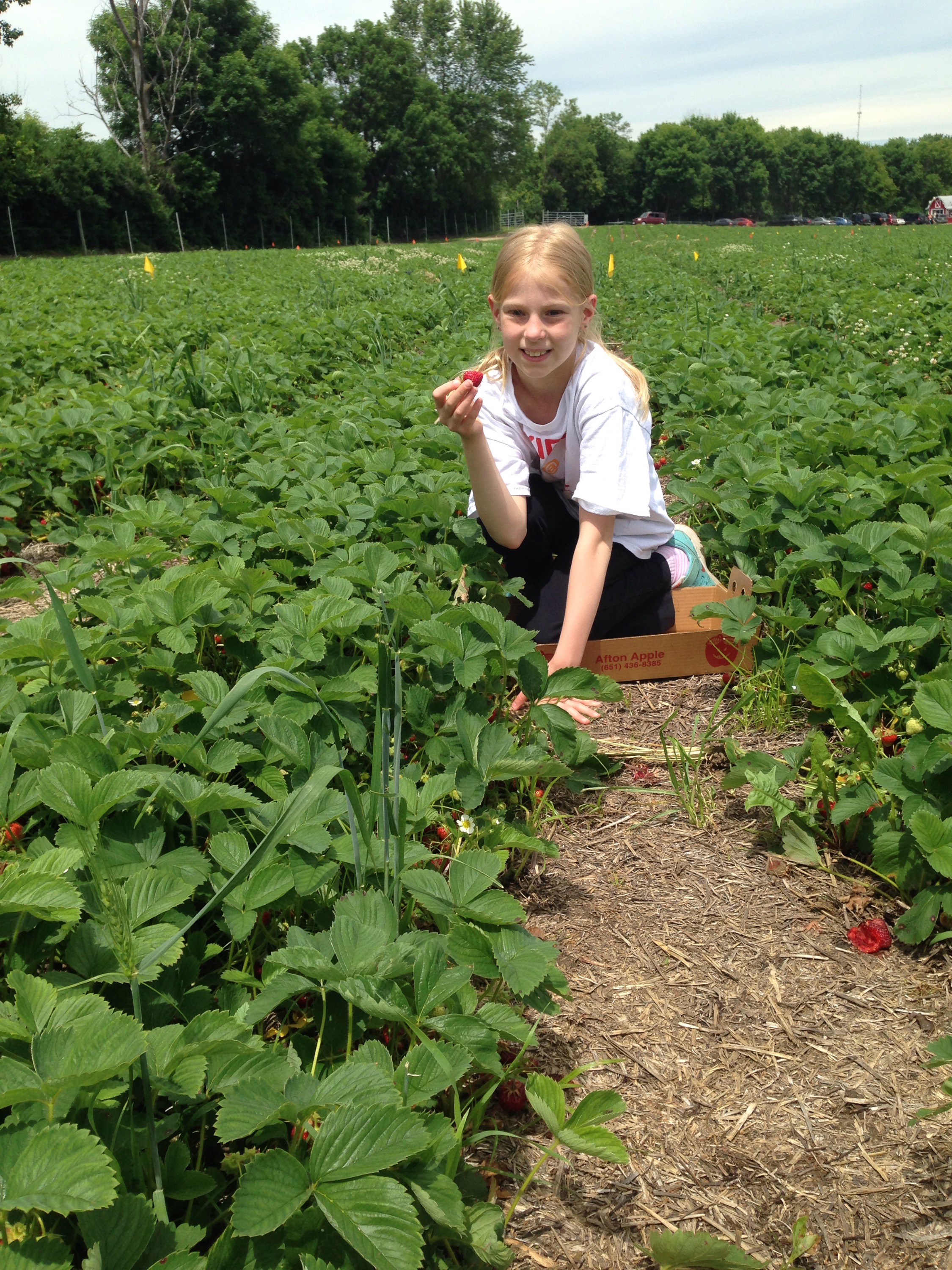
While my daughters and I were on the drive for a spontaneous strawberry-picking trip we passed through Afton, MN, home of Selma’s Ice Cream Parlor and a perfect playground across the street. I was asked from the backseat, “Can we stop there on the way home?”

My answer was my default, “If we have time.” I don’t like to default to “No,” but often we are running on a tight schedule. Our kids aren’t so overly programmed that we can’t do any trips to parks, playgrounds, or berry farms. But at the same time, with five of us, each with our own activity or work schedules, our trips aren’t exactly spontaneous. They have to be carefully coordinated to fit into the right empty spot on the numerous Google calendars we maintain.

Continue reading

A New Goal – Part 2

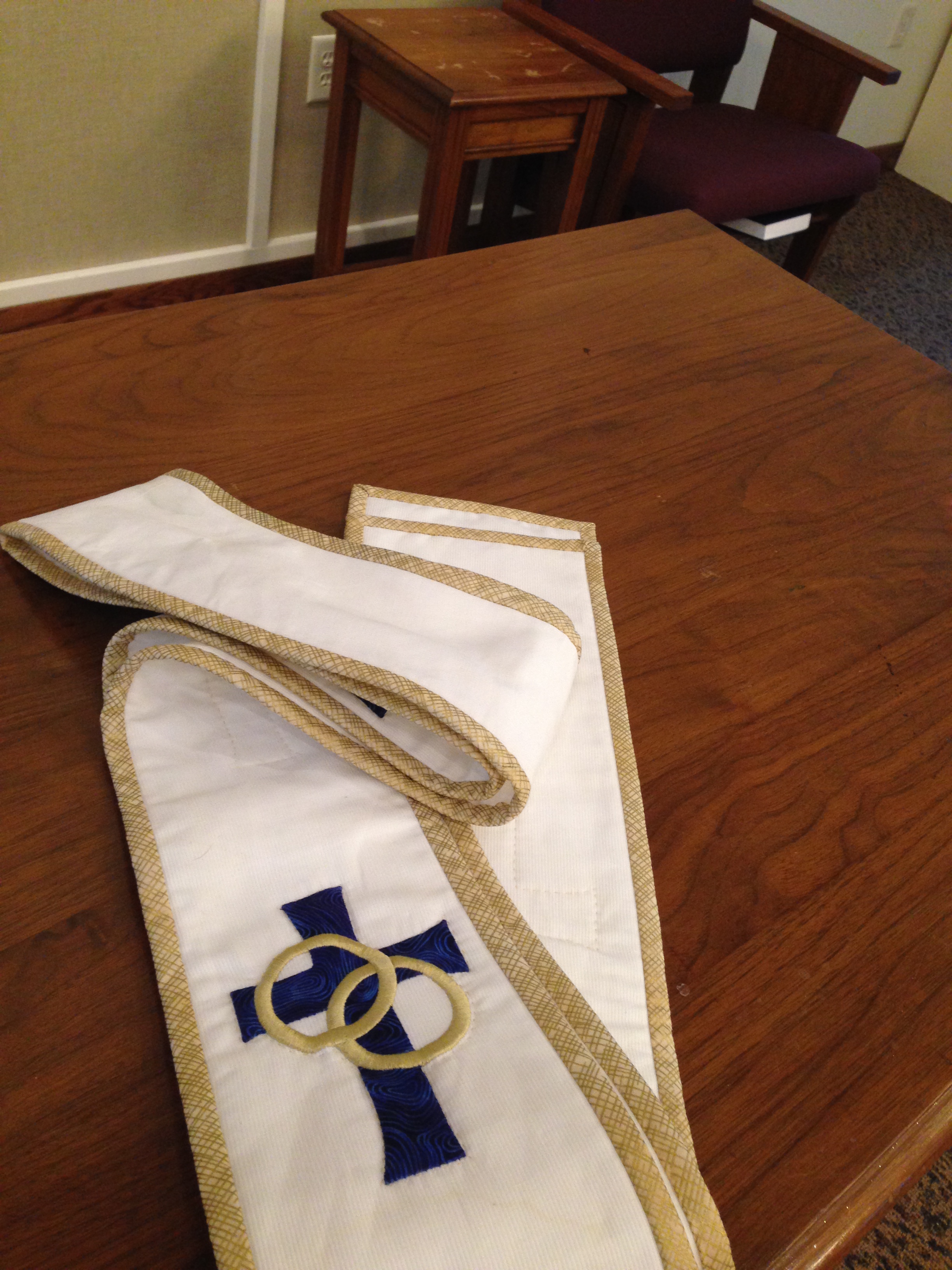
In 2014 marriage equality came both in the denomination I serve, the Presbyterian Church (USA) and the state in which I 3721621517_ba1de61c59_olive, Wisconsin.  While my congregation had slowly but surely been talking about marriage and sexuality in one way or another for the previous 12-18 months, this convergence of opinions made the conversation even more important to our context.  Now that same sex marriage was legal in Wisconsin, would our congregation be willing to host such weddings on our property? Continue reading

A New Goal – Part 1

IMG_8905The session of the church I get to serve, First Presbyterian Church in Hudson, Wisconsin, met for a special meeting on Saturday morning, April 11, and something wonderful happened.  About half way through a Spirit-filled 2 hour meeting the session voted unanimously that “At First Presbyterian Church of Hudson, WI requests for Session consideration of marriage will not be denied based upon sexual orientation.”

It wasn’t wonderful because we are the first church to take such a position.  It wasn’t wonderful because we are the only church to have a unanimous vote. It was wonderful because we somehow got to this place in April that back in August none of us ever would have imagined.  The whole session, even those who personally don’t believe that same sex marriage is part of God’s intention for creation, ultimately agree that same sex weddings could happen on our church property.  We would not categorically prevent same sex couples from requesting a wedding, and most likely, looking at the make up of at least our current session, if a wedding was requested we would vote to allow it.

What made the unanimity of this vote such a surprise and blessing is that our congregation is not an “activist” congregation.  This was in no way a slam dunk.  We don’t have predictable opinions on the hot topics of the day.  We definitely don’t advocate for any political or theological stances as a whole congregation. This is in part because we are true to our Upper Midwestern style of addressing differences.  Which is to say, we don’t go looking for them; we definitely don’t highlight them.  You might even say we consider avoidance a spiritual gift.  It is also because the congregation I serve is a theologically diverse congregation with a theologically diverse session.

Of course, every congregation is in some sense theologically diverse, but for some that spectrum of diversity ranges from the moderate to an extreme, or maybe somewhat left of center to somewhat right.  In our congregation of approximately 220 members the theological spectrum ranges from people who believe in dispensationalist views of the end times (think of the Left Behind series of books and movies) to people who are able to openly express questions about the veracity of the bodily resurrection of Jesus. One of the ways we have stayed together, for better or for worse, is by not spending too much time on issues that might divide us.

But avoidance for any reason was not going to work on marriage equality.  Shifts in church and culture were bringing the discussion of marriage equality closer to home. Even two years before marriage equality came to Wisconsin or the PC(USA) I began to look for resources that would help me lead this larger discussion.  I was completely underwhelmed. None of the resources I found  fit our reality.  While I assumed we couldn’t possibly be the only church out there that wasn’t completely “pro” or “con,” in many ways it felt like we were alone as we moved through a season of discernment about same-sex marriage and our worship and ministry.

Most resources had a clear bias.  They all seemed to argue for a particular outcome, either to help convince someone to change his or her mind or bolster an opinion already held.  This didn’t seem helpful for a couple of reasons.  First, I have rarely found it effective to try to teach someone into a new opinion with books, studies, or lectures. Second, I had became more and more certain as we had been having conversations about marriage and sexuality in our church for at least a year that our goal didn’t need to be getting everyone to agree; our goal needed to be to determine how we would live and behave as the church when we all don’t agree.  My goal shifted from trying to get as close to unanimity as possibly to trying to nurture a culture in our church where participants are encouraged to faithfully interpret Scripture according to their understanding of the guidance of the Holy Spirit and live according to their faith-filled interpretation even when that interpretation differs from the interpretation of the person sitting next to them in the pew.

This shift was crucial for what ended up being a unanimous vote that will allow all marriage requests to be considered without discrimination, while also honoring the responsibility of individual session members to vote according to their discernment of the Spirit and will of God.

How I planned and carried out studies and discussions that moved us toward this vote will be shared in my next post.