The Gift of the Law – A sermon on Exodus 20:1-17

It’s a common Christian misconception to think the Old Testament is all about an angry, vengeful God, while the New Testament has a monopoly on love and grace. Often people will point to “all those rules and commandments” to support that kind of thinking. In this sermon, we look at the Ten Commandments, where they sit in the story of God’s love for God’s people and how they guide us to live in that love.

Exodus 20:1-17

The manuscript appears below.

Continue reading

A Future with Hope: A sermon on Jeremiah 29: 1, 4-14

Jeremiah, a prophet of God, ministered to the people of the southern kingdom of Judah at the end of the 7th century BCE and into the 6th century. The kings that followed Saul, David, and Solomon by and large had not led the people well, and because of the nations’ idolatry, exploitation of the poor, and oppression of people on the margins, their kingdoms have crumbled under outside pressure.

The reading we will hear today is from a letter Jeremiah wrote to some of the people of Judah who have been taken into exile when the natural consequence of the nation’s sin led to their conquer by Babylon. It’s not totally clear how long they have been in exile, anywhere from 1 to 2 years to 10. It’s long enough for them to wonder how they are supposed to live in this strange time in a strange land, and long enough for false prophets to pop up, those who predict a speedy end to this momentary unpleasantness.

Jeremiah 29:1, 4-14

By the rivers of Babylon—
   there we sat down and there we wept
   when we remembered Zion.
On the willows there
   we hung up our harps.
For there our captors
   asked us for songs,
and our tormentors asked for mirth, saying,
   ‘Sing us one of the songs of Zion!’ 


How could we sing the Lord’s song
   in a foreign land?
If I forget you, O Jerusalem,
   let my right hand wither!
Let my tongue cling to the roof of my mouth,
   if I do not remember you,
if I do not set Jerusalem
   above my highest joy. 

Continue reading

Are all welcome? – A sermon based on Acts 8:26-39

Manoel Amaro, CC BY-SA 3.0 https://creativecommons.org/licenses/by-sa/3.0, via Wikimedia Commons (cropped)

Acts 8:26-39

I wonder how the eunuch from Ethiopia came to visit the temple Jerusalem. We don’t know exactly what his relationship is with the faith of most temple worshipers, but somehow he came to be curious enough about the temple and what that takes place there, that he decided to travel all the way to Jerusalem to worship there.

Continue reading

Crossing Chasms

photo by cea+
on flickr, used with permission of Creative Commons Attribution 2.0 license

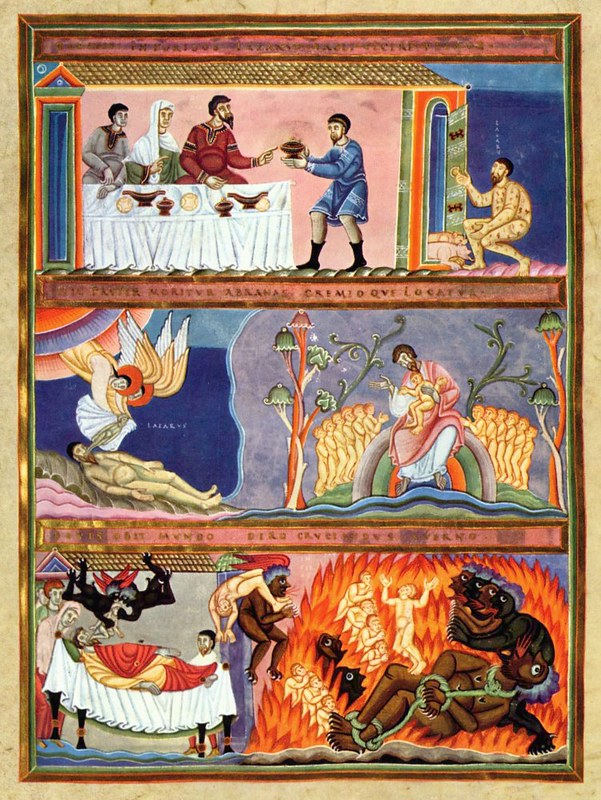
Luke 16:19-31

The rich man in Jesus’s story is in quite a predicament, isn’t he? Things are not going as he expected them to at all. Having arrived in Hades, not so much the heaven and hell of traditional Western Christianity, but a general place of all the dead, he is not getting the treatment he expected.  Understanding riches to be a sign of God’s favor he seems surprised to be tormented by flames while Lazarus, the man who was clearly cursed with poverty and illness, is being comforted in the bosom of Abraham. The rich man doesn’t miss a beat, though.  He knows just want to do. He will order someone to fix his agony for him.

Continue reading

The Way of Truth

The video of this sermon being preached appears at the bottom of the post.

Luke 3:1-22

This morning’s reading from the gospel according to Luke, his account of the ministry of John the Baptist and remarkably brief telling of the baptism of Jesus, starts with a litany of governmental leaders. Luke tells us who all the powerful people are in the Roman world and in the regions that will be important in Jesus’ ministry – Judea, and Galilee, and more. He mentions by name not only the governmental leaders of the leaders of the Jewish community who work in some relationship with the governmental leaders, a relationship that will become important to remember several years later when all of these empire leaders conspire to put Jesus to death.

Luke starts with this time stamp and this recognition of the “powers and principalities,” but then very quickly pivots and in the same sentence says the word of God came not to these, but to John, the son of Zechariah, who was in the wilderness. The word of God, Luke is telling us, the words that John delivered, the ministry he was about, is for and among the people of God. John’s words that we heard, and will hear more about, are kind of harsh, right? They do not tiptoe around and make the people feel good. They do not allow the people who hear them simply to cast judgement on the evil empire or those corrupt rulers in Rome (or liars in Washington) and absolve themselves from any guilt. They confront us, and they call us to listen up and pay attention. This repentance stuff starts at home.

Continue reading

The practice of lament and protest

The blessing of Zoom worship (there are one or two) is that it is easier to capture a video of just a sermon. This morning I stepped into the virtual pulpit (sat at my kitchen table in front of my laptop) to preach about racism and white privilege and lament and protest and to imagine what the Spirit is telling us our congregation’s role is in this movement of anti-racism justice. When I edit up my manuscript I’ll put it here as well. The reading of scripture (Lamentations 1:8-22; 2:10-22) is about half the video. I just didn’t want to make any cuts. #BlackLivesMatter

Yes! How? A sermon on Acts 18:1-4 and 1 Cor. 1:10-18

Acts 18:1-4
1 Corinthians 1:10-18

1234840280_39bdcf1f93_w

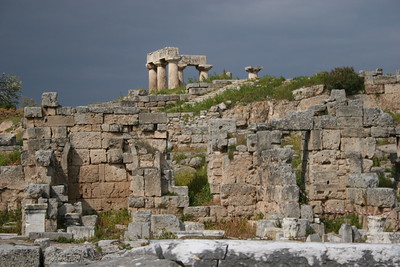
The ruins of Corinth, by Romanus_too, shared on Flickr, used with permission via Creative Commons License

I wonder how Paul found out about Aquila and Priscilla.  Were they the friends of a neighbor he used to pass on his walk down the street to the market every week back in Tarsus?  Were they the Hebrew school classmates of his sister’s husband with whom he had recently connected when they ran into each other unexpectedly in Athens? Continue reading

Who do you say that I am?

Mark 8:22-9:8

I wonder if Jesus would be the kind of person who googles himself. I mean, if this story lmgtfywere taking place today, of course. I mean, instead of asking his disciples, “Who do the people say that I am?” I wonder if today he would have just popped open his laptop, pulled up a browser, and typed his name in the search bar to see what showed up, to see who the people say that he is.

Continue reading